ChoiceCalc Guide - 8 min read
EV vs. Gas: What Actually Drives the 5-Year Cost Difference?
EV versus gas cost comparisons can become noisy fast. The monthly payment is only one part of the decision. Fuel, charging, insurance, maintenance, incentives, depreciation, registration, and home charging setup can all move the five-year estimate.
The useful approach is to compare two specific vehicles over the same ownership period with assumptions you can adjust.
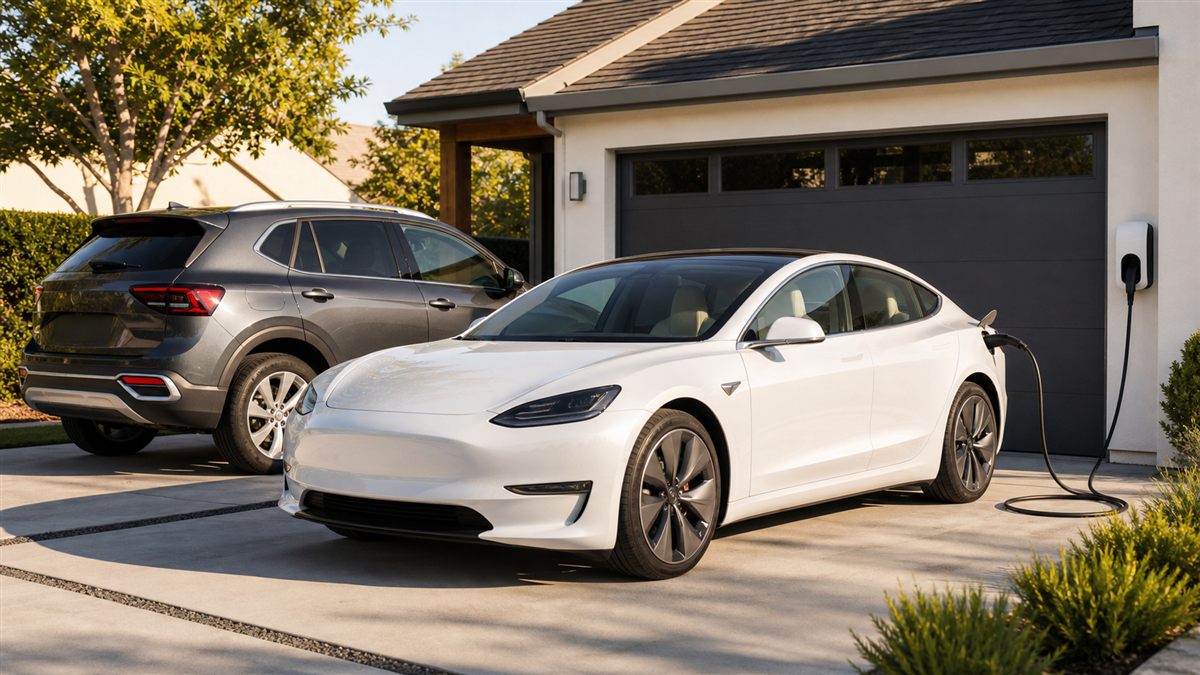
The core tradeoff
An EV may have lower energy and maintenance costs in some scenarios, but a higher purchase price, home charger cost, insurance difference, or depreciation assumption can offset those savings.
A gas vehicle may cost less upfront or be easier for long-distance routines, but fuel and maintenance assumptions can add up over time. The five-year view is helpful because it combines upfront, monthly, and resale effects.
Costs and assumptions to include
Energy cost depends on annual miles, gas price, MPG, electricity rate, EV efficiency, and the share of charging done at home versus public chargers. Public charging can change the math if it is a large share of your routine.
Home charger cost should be included if you would install one. Incentives should be entered only if you are comfortable assuming eligibility and value.
Depreciation and resale value are often major drivers. Instead of assuming one vehicle holds value better, test conservative resale values on both sides.
- Purchase price and financing
- Annual miles
- Gas price and MPG
- Electricity rate and EV efficiency
- Home charging versus public charging
- Home charger installation
- Insurance, maintenance, registration, and incentives
- Resale value after five years
Example scenario
Suppose the EV costs $6,000 more upfront and requires a $1,200 home charger. That creates a $7,200 hurdle before energy savings.
If the EV saves $110 per month in fuel and maintenance, those savings total $6,600 over five years. The EV still needs resale value, incentives, insurance, or other assumptions to close the remaining gap.
If annual mileage is higher, energy savings may matter more. If public charging is common or insurance is higher, the savings may shrink. That is why the same EV can look different for two households.
Common mistakes
One mistake is comparing fuel to charging without the purchase-price difference. Another is counting an incentive without confirming whether it applies to the vehicle and household situation.
A third mistake is ignoring home charging access. An EV owner with reliable home charging may have a different cost path than someone relying mostly on public charging.
It is also easy to use one resale assumption without testing it. A small change in resale value can move the five-year total.
When the calculator helps
Use the calculator when you have two vehicle prices and a realistic driving pattern. It is especially helpful if one option has a higher upfront cost but lower operating costs.
Run a home-charging case, a public-charging case, and a higher-insurance case. The comparison should show which assumptions make the EV or gas path stronger.
Related calculators
Frequently asked questions
Is an EV always cheaper over five years?+
No. The answer depends on vehicle price, charging costs, fuel prices, miles driven, incentives, insurance, maintenance, and resale value.
Should I include a home charger?+
Yes, if you would install one. It is an upfront cost that can affect the payback period.
Do incentives decide the comparison?+
They can matter, but only include incentive amounts you are comfortable assuming. The calculator does not determine eligibility.
Is this vehicle-buying advice?+
No. This guide and calculator are educational estimates only and are not vehicle-buying, financial, tax, legal, insurance, or professional advice.
Educational disclaimer
ChoiceCalc guides and calculators are educational planning tools only. They are not financial, tax, legal, insurance, investment, real estate, employment, childcare, veterinary, vehicle-buying, medical, or other professional advice.